
Tartarus — primordial personified non-being, unique in that he simultaneously exists as a personified Protogenos god and a fundamental realm of the cosmos.
This is not merely a "deep cavern," but a bottomless subterranean chasm yawning in the deepest bowels of the Earth. Tartarus stands as the direct diametric antipode to Heaven, forming the absolute nadir of the material cosmos.
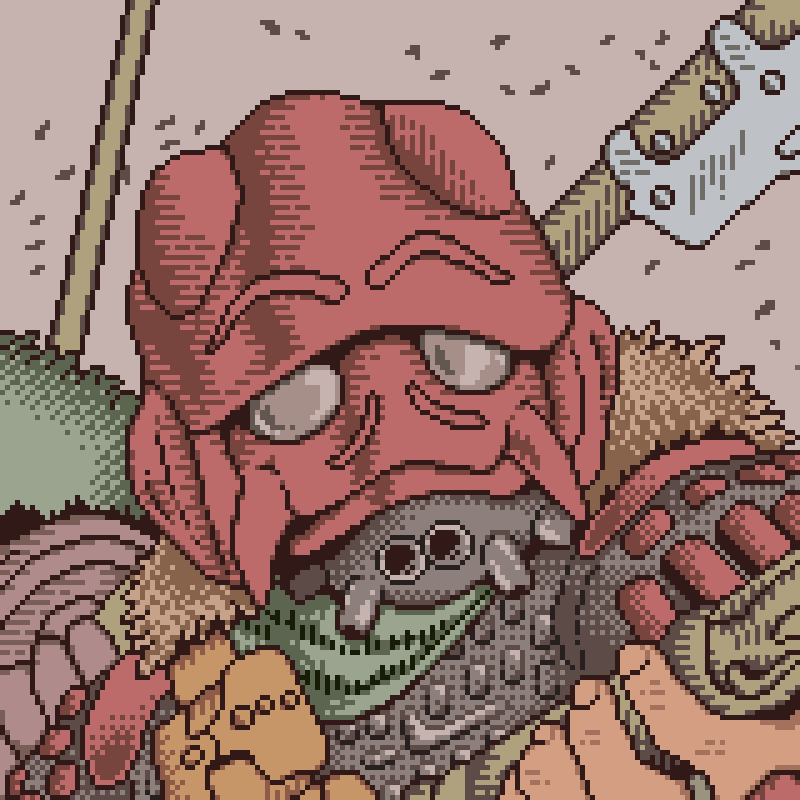
A legendary location...
It is the classic archetype of a cosmic maximum-security supermax prison — for hardened villains or for those wretched enough to have landed there through sheer fatal misfortune.
A daring prison-break plot from such a hopeless place immediately suggests itself)
By the way, this is a rather underrated concept in pop culture, and it seems to me there is immense potential waiting to be tapped.
The Cosmic Axis and the Physics of the Abyss
In the archaic cosmology of Hesiod, the universe possesses a strict spatial symmetry:
Heaven $\rightarrow$ Earth $\rightarrow$ Hades $\rightarrow$ Tartarus $\rightarrow$ Chaos
The sheer scale of this vertical axis is illustrated by the famed metaphor of the "nine-day anvil":
- A bronze anvil falling from Heaven plunges toward Earth for nine days and nights, reaching it on the tenth;
- An anvil cast from Earth plunges to the floor of Tartarus for precisely the same duration — nine days and nights.
Tartarus is the primordial isolation chamber of the cosmos. It is girded by a triple layer of pitch-black Night and an unbreachable wall of bronze forged by Poseidon. Its solitary gates are guarded by the Hecatoncheires (the Hundred-Handed Giants). Because the elder gods are immortal and physically indestructible, Tartarus serves as the only means of neutralizing overthrown sovereigns.
Offspring of Tartarus
Tartarus serves not merely as a prison. When Gaia is seized by fury over Zeus casting her Titan children into the abyss, she unites with murky Tartarus and brings forth Typhon — the most gruesome monster and a central figure of Greek mythology.
The depiction of Typhon is grotesque in the extreme: a hundred dragon heads, from which resound simultaneously the roar of a lion, the baying of a hound, and the hissing of serpents; fire flashing from his eyes; colossal hands spanning from sunrise to sunset. A creature so monstrous that the gods fled in terror to Egypt, assuming animal disguises.
The ultimate abyss begets the ultimate horror. The chthonic visage of Typhon reveals the true nature of Tartarus: the depths of the earth bringing forth a nightmare whose essence hearkens back to primeval Chaos.
A profoundly intriguing concept, for in subsequent myths, any manifestations of Chaos will appear disordered, uncanny, or distorted to varying degrees.
Whereas Typhon stands as their absolute, undiluted archetype.
The Distinction Between Tartarus and Hades
In archaic mythology, Hades and Tartarus represent fundamentally different strata of the Underworld:
- Hades is the general realm of the dead, where the shades of all ordinary mortals depart after demise. It is a domain of mist, memory, and rest;
- Tartarus is a cosmic dungeon plunged immeasurably deeper than Hades. This prison is reserved not for ordinary deceased souls, but for vanquished immortal entities (Titans, Cyclopes) and the most heinous transgressors who defied the sacred decrees of the gods (Sisyphus, Tantalus, Ixion).
The conflation of these concepts occurred much later — in Roman poetry (namely Virgil), where Tartarus came to designate merely the punitive, "infernal" quarter of the Underworld.
Kampe the Sentinel: The Ancient Warden of the Abyss
Before Zeus assigned the Hundred-Handed Giants to guard Tartarus, the dungeon was governed by a monstrous overseer — the dragoness Kampe (Kampe), set by Cronus to watch over the imprisoned Cyclopes.
Kampe was an appalling chthonic hybrid: a woman's torso, the scaled body of a dragon, the venomous sting of a scorpion, and a hundred writhing serpents for feet. In order to win the Cyclopes and the Hundred-Handed Ones to his cause during the Titanomachy, Zeus descended into Tartarus and engaged Kampe in mortal combat, slaying the first jailer in cosmic history.
The Five Great Captives of Tartarus
In the lowest vaults of Tartarus, eternal punishment is endured by mortals and demigods who committed paramount transgressions against the sacred order of the cosmos:
- Sisyphus: for attempting to cheat Death itself (Thanatos) and fleeing the Underworld — condemned to roll a colossal boulder to the summit of a hill, only to watch it plunge back to the bottom at the very last moment;
- Tantalus: for questioning the omniscience of the gods and attempting to serve them the flesh of his own murdered son — stands neck-deep in water beneath boughs laden with luscious fruit, yet the water recedes whenever he stoops to drink, and the branches recoil whenever he reaches for food;
- Ixion: for the sacrilegious attempt to seduce the queen goddess Hera — bound for all eternity to a whirling wheel of fire;
- The Danaids: forty-nine sisters who murdered their husbands on their wedding night — condemned eternally to carry water in leaking vessels to fill a bottomless pithos ("the toil of the Danaids");
- Tityos: a giant who attempted to violate the Titaness Leto — pinned to the earth, where two vultures incessantly tear at his regenerating liver.
#TODO Expand with individual side-myths
Tartarus as the Pulsing Heart of the World (Plato's Phaedo)
In the dialogue Phaedo, Plato articulates a grand natural-philosophical model of the subterranean realm. In this concept, Tartarus is not merely a static dungeon, but a vast chasmic fissure perforating the entire Earth.
Tartarus functions as the colossal, pulsating heart of the cosmos:
- All the subterranean waters of the cosmos are continually drawn into the maw of Tartarus and surging forth from it once more;
- From this respiration arise all the sacred underworld arteries: the river of woe Acheron, the river of fire Phlegethon, and the icy torrent Cocytus;
- The waters of Tartarus surge up and down, dictating the internal cadence and breath of the planet.