
The Daimon (Greek δαίμονες, δαίμων, daimon) — invisible, incorporeal entities, intermediary spirits, and ambivalent messengers bridging the gulf between the transcendent gods of Olympus and mortal humankind.
Occupying the liminal spaces of the classical cosmos, the daimon embodies any supernatural intervention: ascending with mortal prayers and sacrifices unto the gods, and conveying down to humans divine decrees, portentous dreams, and prophetic revelations.
Latin ambo — "both" and valentia — "strength, power" — ambivalent, dual, harboring two opposing properties, sentiments, or relations.
Latin transcendens — climbing over, stepping beyond (that which lies outside human experience, sensory perception, and the mundane world).
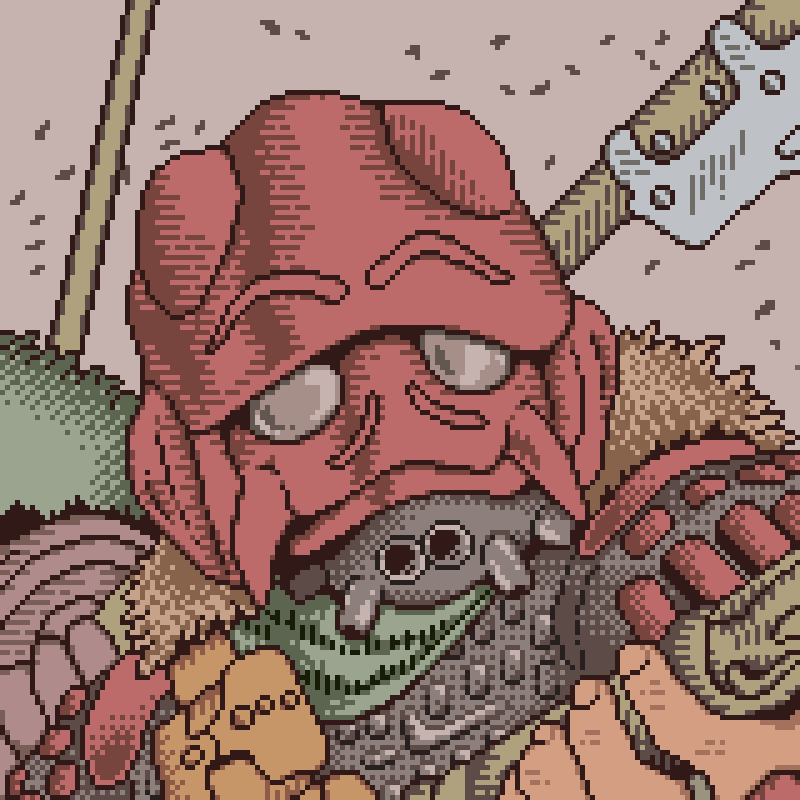
Here, one can clearly trace the most ancient tradition across all cultures — anthropomorphism. In my opinion, this is an astonishingly profound concept and one of the most compelling artistic devices.
In essence, every entity in the world is fundamentally a daimon, yet only the lower spirits are designated as such. Perhaps closest to them are the nymphs, yet they are singled out separately for some reason, which gives one pause for thought... In any case, the archetype is fundamental: a daimon is any existing egregore, idea, spirit, or concept.
Origin of the Concept: From Allotter of Fate to Golden Guardians
The word "daimon" traces back to a Proto-Indo-European root meaning "to divide," which yielded the Ancient Greek verb δαίομαι (daiomai) — "to apportion a share," "to distribute."
In the most archaic conception, a daimon was not a personified entity, but an anonymous, blind force governing one's fortune in the world.
In the epic tradition of Homer, the boundary between the two concepts is fluid yet essential:
Theos (Theos): a god as a visible, anthropomorphic individuality possessing a distinct name, mythos, cult, and attributes (Zeus, Apollo, Poseidon);
Daimon (Daimon): an abrupt, anonymous, and inscrutable intervention. When a hero commits an uncharacteristic deed or encounters an unforeseen turn of fate, the epic remarks: "some daimon entered into him."
In Hesiod's poem Works and Days, the concept undergoes a momentous evolutionary leap:
for the first time, daimons are not faceless forces, but the transfigured souls of departed humans:
Now when Earth had covered this race in its depths,
By the will of great Zeus they became
Good spirits (daimones esthloi) dwelling upon the earth, guardians of mortals,
Who watch over judgments and perilous deeds,
Robed in dense mist, roaming everywhere over the land...
— Hesiod, Works and Days
According to Hesiod, the righteous mortals of the Golden Age did not descend into shadowy Hades upon physical death; instead, they were elevated by Zeus to the station of earthly protectors (epichthonioi).
Veiled in dense mist, they wander through cities, safeguarding justice and confounding impiety.
Philosophical Reinterpretation: Plato and the Nature of Mediation
In the classical era, the nature of the daimon migrated from poetic mythology into rigorous ontology.
[Embed unavailable: "Symposium"]
The Daimonion of Socrates
Socrates himself bore witness throughout his entire life to the presence of a personal "daemonic sign" (Daimonion sēmeion).
In the Apology of Socrates, the philosopher portrays it as a quiet inner voice:
This sign I have had from my childhood. It is a kind of voice which, whenever it speaks, always turns me away from what I am about to do, but never incites me to anything.
The daimonion of Socrates operated as a prohibition, arresting the philosopher before he could commit immoral or ill-advised deeds (apophatically).
Although the daimon remained silent during the Athenian trial — thereby signaling that what was unfolding was not an evil — Socrates's accusers twisted this mystical intuition and conscience during the proceedings, charging him with introducing new, unauthorized daemonic powers unacknowledged by the polis.
The Daimon as the Soul's Lot (The Myth of Er)
In Book X of The Republic, Plato completely deconstructs the doctrine of blind fate:
- Souls approach the spindle of the goddess Ananke (Necessity) prior to each subsequent rebirth;
- The soul freely chooses its destined lot and mode of existence;
- To each soul is assigned as an attendant the specific guardian daimon whose destiny it has voluntarily embraced.
Here resonates the famous classical aphorism of Heraclitus: "A man's character is his daimon" (Ethos anthropoi daimon).
Classification: Agathodaimons, Kakodaimons, and Shadow Demons
In Hellenistic thought (specifically within the Academy under Xenocrates — a disciple of Plato), daimonology crystallized into a rigorous hierarchical system. Xenocrates was the first to attribute human passions (pathos) to daimons, introducing a dualistic division:
-
Agathodaimon (Agathodaimon): the benevolent spirit-protector of a polis, family, or individual. Revered in household cults as the guardian of hearth and harvest, often portrayed as a serpent bearing a cornucopia;
-
Kakodaimon (Kakodaimon): a malevolent entity sowing madness, pestilence, spiritual torpor, and driving mortals to commit offenses against cosmic measure (hubris).
The Hellenes performed an obligatory ritual libation in honor of the Good Daimon at the conclusion of every symposium: when the meal was finished, servants bore around unmixed, pure wine, a sip of which was drunk to toast the protector of the hearth.
Daimons of the Nocturnal Abyss
Within the genealogical tapestry of the cosmos, an entire host of primordial daimons was born at the dawn of creation from the union of cosmic Darkness and Void:
Nyx also brings forth autonomously a vast multitude of entities (daimons) — predominantly grim, underscoring her stature as the wellspring of all future tribulations and constraints of mortal existence:
These entities demand no temple construction from mortals. They operate as inexorable forces of terrestrial existence, impossible to appease or buy off through sacrifice.
#TODO Daimons of Pandora
The Mortality of Daimons
Unlike the Olympian gods endowed with absolute immortality (athanasia), daimons consist of subtle, aerial matter and are "potentially mortal." Their lifespan is immeasurably long yet finite — they perish or depart when their sacred groves or oracles vanish, or when their internal vital pneuma is exhausted.
Plutarch, the historian and high priest of Delphi (1st–2nd century CE), thoroughly analyzed this vulnerability in his treatise On the Obsolescence of Oracles. It is precisely through the death or departure of daimons that Plutarch explains why the most ancient prophetic sanctuaries fall silent:
when a shrine's inspiring daimon abandons it, the priestesses lose their visionary gift.
The culmination of this theme arrives in the celebrated account recorded by Plutarch concerning the helmsman Thamus:
While sailing past the island of Paxi during the reign of Emperor Tiberius, a ship was becalmed. Suddenly, a booming voice resounded from the shore, commanding the helmsman:
«When thou art come over against Palodes, announce that
Great Pan is dead!»
When the vessel reached the designated spot and the helmsman shouted these words, a great lamentation and groaning of thousands of unseen beings arose from the shores.
— Plutarch, On the Obsolescence of Oracles
The woodland god Pan was the personification of all wild nature. The news of his demise signaled that living nature had been stripped of its soul: daimons, nymphs, and grove-spirits began to perish, the oracles fell silent, and ancient classical magic departed from the world forever, surrendering to a new era.